
The Fruit Forest Initiative by Thanal Trust aims to restore biodiversity and strengthen ecological awareness by establishing fruit-bearing tree clusters using agroecological practices. Designed as long-term green assets, these fruit forests combine ecological restoration with learning, stewardship, and community participation.
Implemented across different contexts, the initiative adapts to each landscape while remaining rooted in the same vision of sustainability, soil health, and care for nature.
Fruit Forests in School Campuses
With KIMS Health (CSR)
Beginning in 2024, Thanal partnered with KIMS Health to establish fruit forests at Trivandrum International School and Lecole Chempaka.
Located within school campuses, these fruit forests were designed as living classrooms, integrating nature-centred learning into everyday school life.
What Took Root
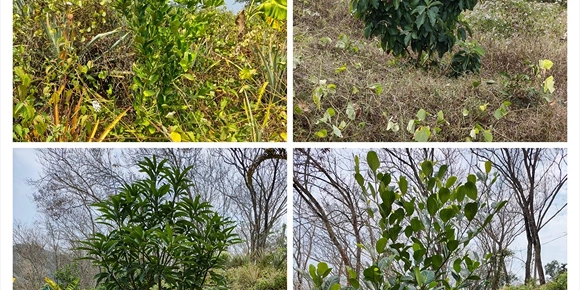
- 360 fruit saplings planted
- 240 at TRINS
- 120 at Lecole Chempaka
- Trees selected for local adaptability, nutrition, and ecological value
- Active involvement of students and teachers in planting and care
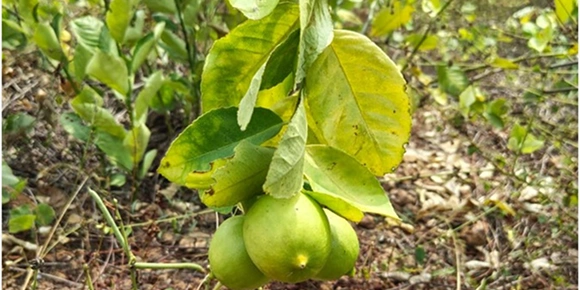
Over time, steady growth, early fruiting in a few saplings, and increasing sightings of butterflies, bees, and birds indicate the gradual formation of healthy micro-ecosystems.
Students participate in watering, composting, mulching, and monitoring, while teachers integrate the fruit forests into lessons on soil health, biodiversity, climate, and food systems. Caring for the trees has fostered responsibility, teamwork, and emotional connections with nature.
The fruit forests continue to be maintained by the school communities, strengthening green cover and reinforcing environmental responsibility as part of daily school life.
Fruit Forest at Ruh Farms, Panayamuttam
With RWDI (CSR)
On Earth Day 2025, Thanal Trust, in collaboration with RWDI, established a Fruit Forest at Ruh Farms.
A total of 104 fruit saplings were planted to form the foundation of a multi-layered fruit forest, with species selected to ensure ecological balance, seasonal diversity, and long-term productivity. The plantation was designed to grow in harmony with the land, allowing space for healthy root systems, airflow, and natural growth patterns.
The Fruit Forest was developed as a fully chemical-free intervention. Natural farming and soil-care practices were followed to strengthen soil health, retain moisture, and support steady plant growth.
These approaches have contributed to strong sapling establishment, healthy foliage and growth and early fruiting in a few species. Even at this early stage, the fruit forest has begun showing signs of ecological recovery. Increased sightings of birds, butterflies, bees, and beneficial insects point to the gradual formation of a living ecosystem that supports natural pollination and balance.
The Fruit Forest at Ruh Farms demonstrates that:
- Ecological restoration is possible within managed agricultural spaces
- Biodiversity and food production can coexist
- Sustainable farming practices are practical and scalable
- Long-term care and collective action lead to resilient landscapes
Our Approach to CSR Partnerships
Thanal works with CSR partners to co-create community-centred, ecologically responsible initiatives. Each project is designed for long-term relevance, local ownership, and sustainability beyond the funding period.